Why Severe-Weather Forecasting Matters More Than Ever
Extreme weather events such as heat waves, floods, hurricanes, wildfires, and droughts are increasing in frequency and intensity as the climate warms. Accurate and timely forecasts are critical for saving lives, protecting infrastructure, and guiding emergency response. Over the past two decades, forecasting skill has improved dramatically, driven by advances in climate models and the explosive growth of satellite data. Together, these tools are transforming how scientists detect, predict, and communicate extreme weather risks.
Modern Climate Models: From Coarse Averages to Fine Detail
Climate models act as computer simulations designed to capture the physical, chemical, and biological processes of the Earth system. Past generations concentrated on long-term averages across broad spatial scales, which proved helpful for grasping global shifts yet restricted when examining localized extremes. Modern models offer vastly superior capabilities today.
Key improvements include:
- Higher spatial resolution: Global models now simulate grid cells as small as 10–25 kilometers, while regional models can reach 1–4 kilometers. This allows explicit representation of thunderstorms, mountain effects, and coastal processes that drive extreme rainfall and winds.
- Better physical processes: Advances in cloud microphysics, land–atmosphere coupling, and ocean dynamics improve how models simulate heat waves, flash floods, and tropical cyclones.
- Earth system integration: Modern models link the atmosphere with oceans, ice sheets, vegetation, and soils, enabling better prediction of compound events such as heat waves combined with drought or storm surge combined with heavy rain.
For instance, advanced high-resolution hurricane models currently simulate rapid intensification phenomena that proved difficult to predict twenty years ago. Operational centers report that trajectory forecast inaccuracies for significant tropical cyclones have dropped by upwards of 50 percent relative to the early 2000s.
Ensemble Forecasting and Probabilistic Insight
A lone model run cannot capture all uncertainties. To address this, forecasters rely on ensemble modeling, executing dozens or hundreds of simulations featuring slightly varied initial conditions or model physics.
This approach:
- Estimates the probability of extreme outcomes rather than a single deterministic forecast.
- Improves early warning for rare but high-impact events, such as once-in-50-year rainfall.
- Supports risk-based decision-making for emergency managers and insurers.
For heat waves in Europe and North America, ensemble forecasts now provide reliable warnings up to 10 days in advance, compared with about 3 to 5 days in the early 2000s.
The Satellite Revolution: A Global, Continuous Eye
Satellites provide the observational backbone of modern weather and climate prediction. They deliver continuous, near-real-time data across oceans, deserts, and polar regions where ground observations are sparse.
Critical satellite contributions include:
- Atmospheric profiling: Instruments measure temperature, humidity, and wind throughout the atmosphere, essential for initializing models.
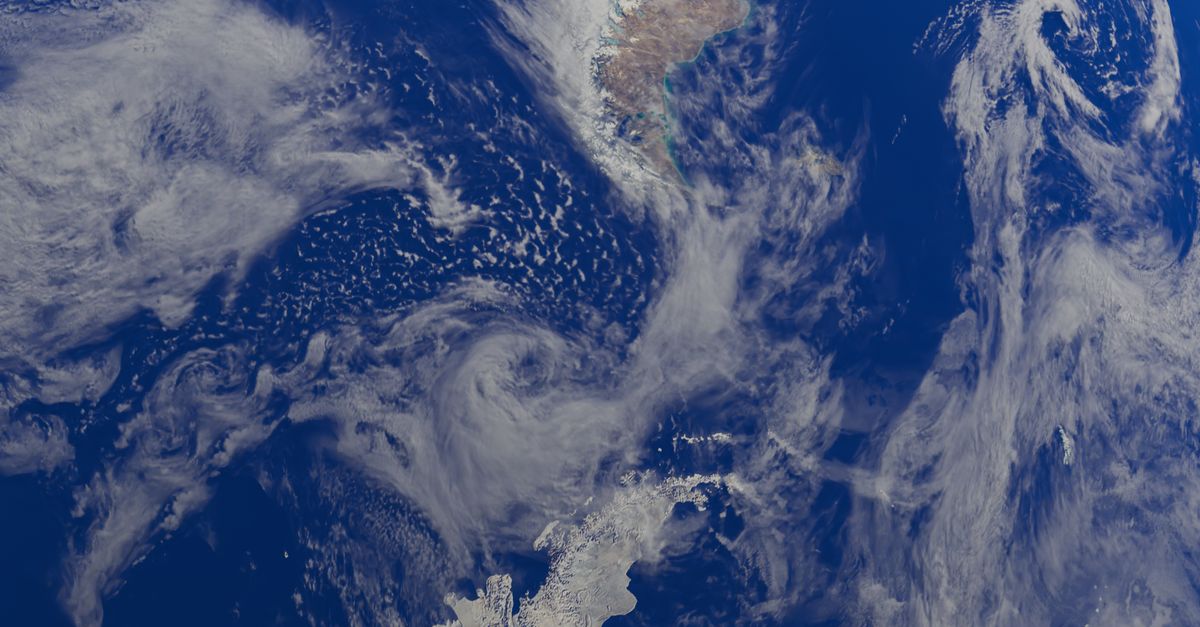
- Storm monitoring: High-frequency imagery tracks the development of hurricanes, severe storms, and atmospheric rivers.
- Surface conditions: Satellites observe sea surface temperatures, soil moisture, snow cover, and vegetation stress, all of which influence extremes.
For example, satellite-based precipitation estimates have significantly improved flood forecasting in regions such as South Asia and sub-Saharan Africa, where rain gauge networks are limited.
Data Assimilation: Turning Observations into Forecast Skill
Satellite data do not improve forecasts automatically. They must be integrated into models through data assimilation, a mathematical process that blends observations with model physics to create the best estimate of the current state of the atmosphere and oceans.
Modern assimilation systems:
- Ingest millions of satellite observations every day.
- Correct model biases and reduce initial-condition errors.
- Improve forecasts of rapidly evolving extremes such as severe convective storms.
Studies show that satellite data assimilation accounts for more than half of the overall improvement in global weather forecast accuracy since 1980.
Artificial Intelligence and Hybrid Approaches
Artificial intelligence and machine learning are increasingly used alongside traditional physics-based models. These methods excel at identifying patterns in vast datasets and correcting systematic errors.
Applications include:
- Downscaling global forecasts to neighborhood-level detail.
- Rapid identification of extreme rainfall or wind patterns from satellite imagery.
- Post-processing model output to improve accuracy and reliability.
In wildfire forecasting, AI systems combining satellite fire detections, weather models, and vegetation data now predict fire spread with unprecedented speed and precision.
Real-World Impacts and Case Studies
The combined power of climate models and satellite data has tangible benefits:
- Flood forecasting: Improved rainfall estimates and river models enabled earlier evacuation during recent major flood events in parts of Asia and Europe.
- Heat health warnings: Cities use advanced heat forecasts to trigger public cooling centers and emergency services, reducing heat-related mortality.
- Storm surge prediction: Coupled ocean–atmosphere models help coastal communities prepare for compound flooding from storms and sea-level rise.
Economic studies indicate that every single dollar put into enhanced meteorological forecasting generates multiple dollars in prevented losses and emergency response expenses.
A Forward-Looking Perspective
Climate models and satellite observations are no longer disconnected instruments; together, they create a unified framework that constantly evolves, learns, and refines itself. With expanding satellite constellations, advancing artificial intelligence, and increasing computational capacity, extreme-weather predictions are set to become sharper, highly probabilistic, and deeply actionable. Ultimately, the true benchmark of progress rests not just on scientific precision, but on how successfully these predictions empower populations confronting a future where environmental extremes are no longer anomalies, but core characteristics of the global climate.