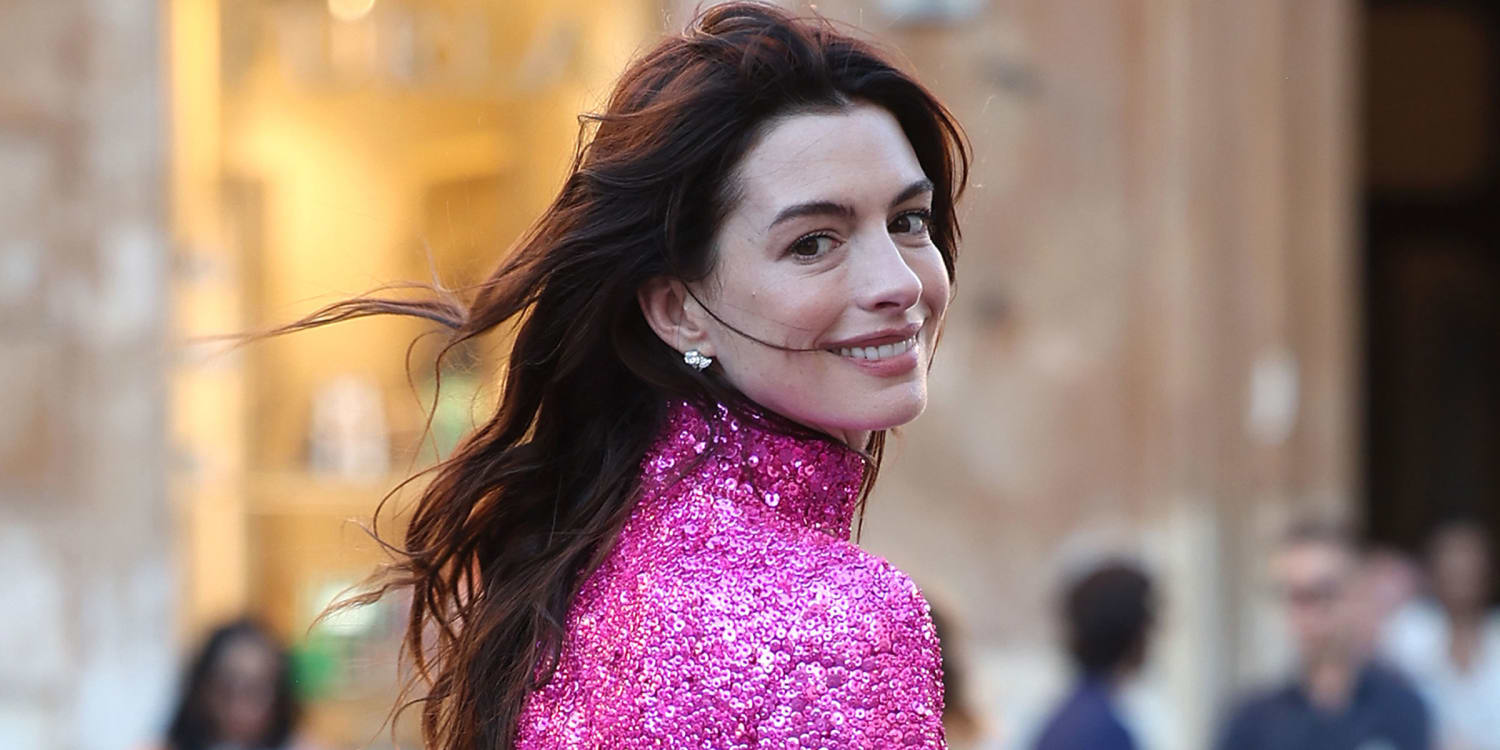
Over the years, Anne Hathaway has become a defining presence not just in the world of film but also in fashion, with several standout moments gracing the pages of Vogue magazine. Known for her timeless beauty, versatility as an actress, and evolving style, Hathaway’s relationship with Vogue has offered fans a glimpse into her personal journey, professional milestones, and ever-changing fashion sensibilities.
From the initial phases of her journey as an emerging star in the Hollywood scene to her established position as an experienced actress and fashion symbol, Hathaway’s appearances in Vogue demonstrate the transformations in both her career and public persona. Each article has documented a unique segment of her life, merging haute couture with genuine perspectives on the individual beyond the spotlight.
A prominent feature about Hathaway appeared in Vogue in the mid-2000s, a time when her career was rapidly ascending after the premieres of The Princess Diaries and The Devil Wears Prada. The latter film, especially, not only entrenched her status in Hollywood but also opened doors to the realm of high-end fashion—a bond that would deepen in the ensuing years. Vogue’s articles then depicted Hathaway as the epitome of the contemporary woman: smart, captivating, and naturally fashionable.
In the early interviews, Hathaway candidly shared her early unease with the fashion scene. Even though she was part of one of the most legendary fashion movies, she revealed feeling like she didn’t quite belong in the realm of designer attire and fashion spectacles. Vogue emphasized her ability to connect with the audience, portraying her as a person who, despite her elegance, remained humble and accessible.
As Hathaway’s professional journey advanced, her features in Vogue began to portray a more refined and self-assured individual. The 2008 appearance, coinciding with the launch of Rachel Getting Married, highlighted not only a change in her acting selections but also a profound inquiry into her private life. The images depicted Hathaway in graceful, subtle attire, indicating a move away from the playful fashion linked to her previous roles. The accompanying article explored her perspectives on stardom, connections, and the difficulties of managing a life in the public eye—topics that resonated with the audience.
Throughout the 2010s, Hathaway’s relationship with fashion grew more pronounced, and Vogue remained a key platform where her evolving style was displayed. One particularly memorable appearance coincided with her role as Catwoman in The Dark Knight Rises. The spread was bold, edgy, and transformative, with Hathaway embracing sleek silhouettes and darker aesthetics. This shift not only underscored her versatility as an actress but also her ability to reinvent herself visually—an essential trait in the ever-evolving world of celebrity fashion.
Beyond the clothing, Hathaway’s interviews during this era revealed a growing confidence and willingness to discuss topics such as body image, mental health, and the pressures of Hollywood. Her honesty endeared her to fans and critics alike, adding layers of depth to the polished images that accompanied each feature. Vogue, in turn, presented her not merely as a fashion muse but as a thoughtful, articulate woman unafraid to challenge expectations.
Another noteworthy highlight in Hathaway’s journey with Vogue was marked by her Oscar victory in 2013 for Les Misérables. The media following her win at the Academy Awards showcased Hathaway at both a career and personal peak. The style focused on traditional Hollywood elegance, highlighting perfectly fitted dresses, opulent materials, and enduring allure. However, the accompanying stories delved into the vulnerability she felt under public attention, especially as she dealt with intense media examination during that time.
Hathaway’s capacity for resilience emerged as a recurring theme in her later Vogue appearances. After stepping back from the spotlight for a time to focus on her personal life and growing family, she returned to the public eye with renewed energy and perspective. Vogue profiles during this phase often emphasized balance—between career and motherhood, public persona and private self, ambition and authenticity.
Her interviews began to highlight broader themes such as women’s empowerment, equality in the entertainment industry, and the importance of using one’s platform for meaningful change. These conversations reflected Hathaway’s own evolution and the shifting cultural landscape. Vogue, renowned for its ability to capture both fashion and social consciousness, provided the perfect forum for these reflections.
In more recent features, Hathaway has embraced a bolder, more experimental fashion sense. She has been seen wearing avant-garde designs, vibrant colors, and daring silhouettes that reflect a woman entirely at ease with herself. The styling choices in these shoots reflect not just current trends but also Hathaway’s willingness to take risks and express her individuality—an attribute that has become central to her enduring appeal.
The actress has also spoken candidly about her experiences with aging in Hollywood, an industry often criticized for its treatment of women over 40. In interviews, she has expressed gratitude for the opportunities that continue to come her way while also advocating for greater representation and inclusivity across the entertainment landscape. These nuanced conversations have elevated her Vogue appearances beyond mere fashion showcases, transforming them into platforms for meaningful dialogue.
Anne Hathaway’s ability to remain relevant in both fashion and film over two decades speaks to her adaptability and authenticity. Her appearances in Vogue have chronicled this journey, offering snapshots of a woman who has grown from ingénue to Oscar-winner, from reluctant fashion participant to style icon. Each feature reveals a different facet of her personality, allowing readers to witness her evolution in both subtle and striking ways.
As Hathaway continues to take on new roles, both on-screen and off, it is likely that her relationship with Vogue will evolve further. The magazine has not only documented her changing style but has also provided a lens through which the public can understand her career, her challenges, and her triumphs. In an industry where reinvention is often necessary for longevity, Hathaway’s story serves as a testament to the power of authenticity and resilience.
Fashion, ultimately, is not solely about garments—it embodies self-expression, change, and narrative. Hathaway’s Vogue appearances embody this reality. Whether showcased in sophisticated couture or bold modern styles, she has continually leveraged fashion as a means to mirror her personal development and to connect with wider cultural dialogues. Through this, she has sustained her status as both pertinent and esteemed, motivating audiences well beyond the cinematic world.
Looking ahead, Hathaway’s impact on both fashion and film seems poised to continue. With new projects, public advocacy, and an ever-evolving sense of style, she remains a compelling figure in both industries. As Vogue undoubtedly captures future chapters of her journey, readers can expect more than just stunning photography—they can expect insight into the heart and mind of an artist unafraid to evolve, to challenge herself, and to speak her truth.
Anne Hathaway’s most memorable Vogue moments are not solely defined by the clothes she wears but by the stories she shares and the authenticity she brings to every page.