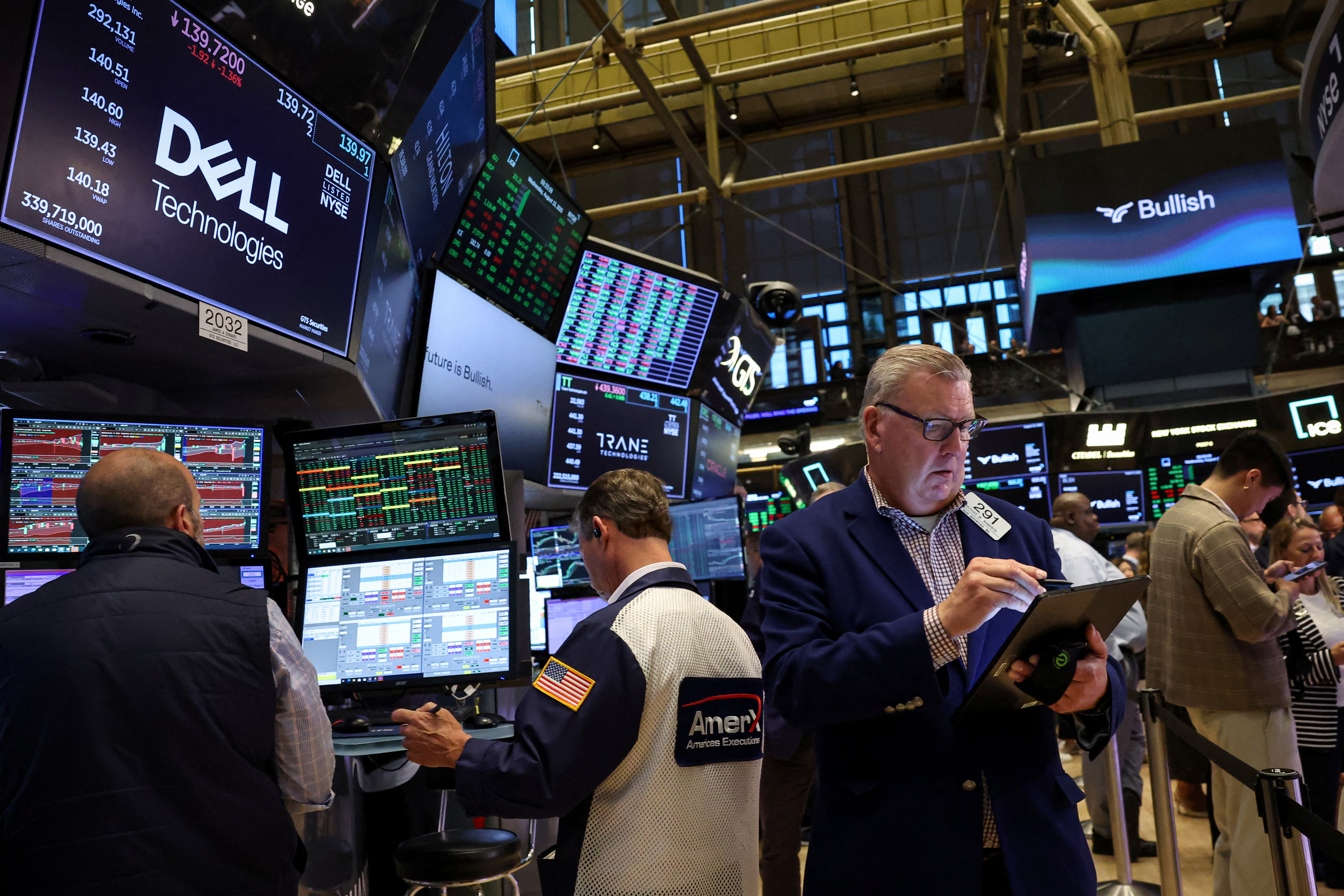
The stock market has been experiencing a notable surge, with the Dow Jones Industrial Average nearing all-time highs, propelled by a widespread belief among investors that a series of interest rate cuts from the Federal Reserve is on the horizon. This sense of anticipation, often referred to as “rate-cut fever,” has become a dominant force on Wall Street. It is driving investor behavior and reshaping expectations for the economic landscape in the coming year. The market’s enthusiasm is a powerful signal of its confidence that the central bank will soon shift its monetary policy from a restrictive stance to a more accommodative one, a move that would provide a significant boost to corporate earnings and overall economic activity.
This newfound optimism stands in stark contrast to the mood just a few months ago, when persistent inflation and a hawkish Fed kept a lid on market gains. The shift in sentiment can be traced to a series of key economic data points that have shown a cooling in inflationary pressures and a slight softening in the labor market. These indicators have been interpreted by investors as a green light for the Fed to begin lowering borrowing costs, a move that would make it cheaper for companies to invest and for consumers to spend. This dynamic has created a powerful tailwind for stocks, as market participants rush to position themselves for a new cycle of easier monetary policy.
The allure of lower interest rates is particularly strong for high-growth sectors, such as technology and real estate. These industries are highly sensitive to the cost of capital, and a reduction in rates would make their future earnings streams more valuable in today’s terms. It also makes debt more affordable, encouraging companies to expand and innovate. This is one of the primary reasons why the Nasdaq Composite, which is heavily weighted toward technology stocks, has also seen significant gains alongside the Dow. The market is effectively pricing in a future where capital is more abundant and less expensive, a scenario that would favor companies with ambitious growth plans.
However, the current market optimism is not without its risks. The belief that the Fed will cut rates aggressively is based on a number of assumptions that may not hold true. A sudden reversal in inflation trends, a stronger-than-expected jobs report, or any other unexpected economic development could force the central bank to delay or even reverse its plans. Such a change in course would likely send a jolt through the market, potentially leading to a sharp correction. The current environment is therefore a delicate balancing act, with investors betting on a specific outcome while remaining vulnerable to any deviation from that path.
The concept of a “soft landing,” where the Fed successfully tames inflation without pushing the economy into a recession, is the central narrative underpinning the current market rally. This scenario, once considered a long shot, is now seen by many as a likely outcome. The market is essentially celebrating the idea that the Fed has navigated a difficult period with a masterful hand, and that the economy is poised for a period of sustainable growth with lower inflation. This belief, whether it is ultimately borne out by events or not, is a powerful psychological driver that is fueling the market’s ascent..
The continued momentum of the rally will hinge on a few essential elements. Primarily, the Federal Reserve’s forthcoming policy actions will be crucial. Any shift away from the expected interest rate reductions might unsettle investors. Additionally, the durability of corporate profits is vital, as market strength relies on more than just optimism. Investors will be attentively observing whether companies can maintain their revenue increases amid persistent economic unpredictability. Lastly, the geopolitical environment remains unpredictable, with possible conflicts and trade disagreements that could interrupt supply chains and jeopardize economic steadiness.
The current market environment is a fascinating case study in the power of expectations. The Dow’s proximity to record territory is not just a reflection of current economic conditions, but of a collective bet on the future. Investors are looking past the present and placing their wagers on a future where inflation is under control and the Fed is actively supporting growth.
This is a powerful testament to the market’s forward-looking nature, but it also highlights its vulnerability to any unexpected twists and turns. The coming months will be a crucial test of whether the current optimism is justified or merely a case of wishful thinking. The difference will determine whether the Dow soars to new heights or retreats from its current perch.