Year: 2026

How are AI and protein folding tools accelerating drug discovery?

how AI tools predict protein structures to speed up drug design

Drug discovery has long been a slow, costly, and high‑stakes endeavor, often requiring more than ten years and enormous financial investment before a single therapy reaches the market. Breakthroughs in artificial intelligence and protein folding tools are now transforming this process by greatly enhancing how researchers interpret biological targets, craft potential drug molecules, and anticipate their effects. As these innovations advance, development timelines are shrinking, expenses are decreasing, and therapeutic possibilities once considered unattainable are becoming viable.The Central Role of Protein Structure in Drug DiscoveryMost medications exert their effects by attaching to specific proteins and modifying how those proteins function,…

Read More
How do companies quantify reputational risk in valuation models?

Financial consequences of reputational damage in corporate valuation

Reputational risk describes the possible decline in a company’s value that arises when stakeholders’ views worsen in response to actual or perceived situations, such as ethical lapses, regulatory violations, faulty products, data protection issues, or environmental damage, and because reputation shapes customer confidence, pricing leverage, talent retention, and the ability to secure capital, it has become a significant element in assessing corporate worth.Contemporary valuation frameworks increasingly seek to measure reputational risk rather than regard it as merely a qualitative issue, and although reputation is intangible, its financial impacts can be detected, assessed, and often prove enduring.Why It Is Essential to…
Read More
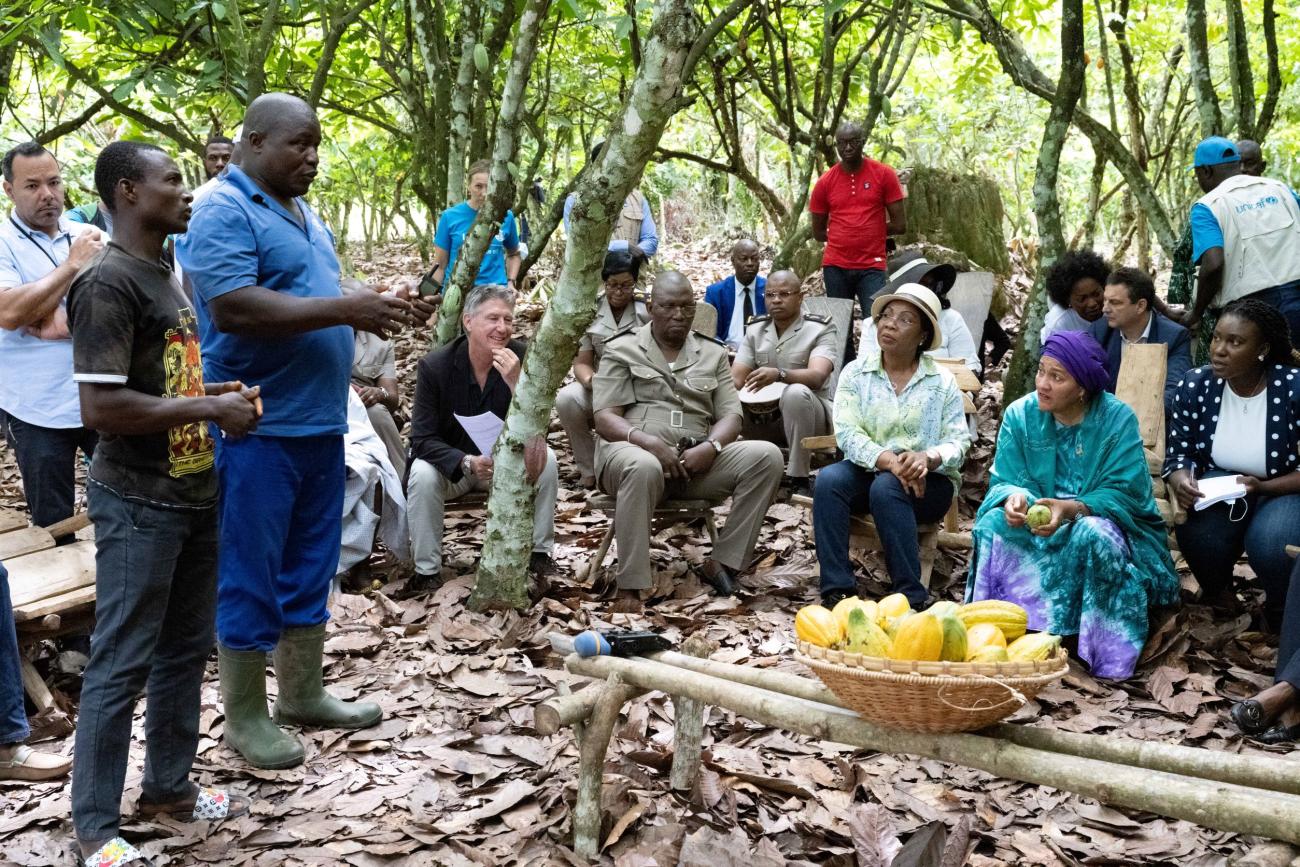
Côte d’Ivoire: cocoa CSR with traceability and better incomes for growers

Corporate social responsibility and the future of sustainable cocoa farming in Ivory Coast

Ivory Coast accounts for roughly 40% of global cocoa supply, producing around 2 million metric tons in recent seasons. Cocoa is central to the country’s export earnings and to the livelihoods of millions of smallholder families. At the same time, the sector faces structural challenges: low farmer incomes, persistent child labor, aging trees and low productivity, deforestation, and fragmented supply chains. Corporate social responsibility (CSR) efforts combined with modern traceability systems are increasingly positioned as the levers that can align industry profit with social and environmental outcomes.The CSR environment: regulations, corporate pledges, and key hurdlesCSR efforts in Ivory Coast are…
Read More
What style defines Nicolas Ghesquière at Louis Vuitton?

How Ghesquière shaped Louis Vuitton’s modern style

Defining the Signature Style of Nicolas Ghesquière at Louis VuittonNicolas Ghesquière, who has served as the Artistic Director of Louis Vuitton’s women’s collections since 2013, has left a singular and forward-thinking mark on the storied French maison. His creative approach for Louis Vuitton intertwines the brand’s legacy with a sharply contemporary edge, ushering in a period defined by bold innovation, futuristic structures, and narrative-driven design that draws inspiration from a wide spectrum of eras and cultures. To grasp the aesthetic that characterizes Nicolas Ghesquière at Louis Vuitton, it becomes important to explore his core stylistic principles, standout collections, and the…
Read More
Ocean Front

The changing real estate landscape of Panama Oeste

Panama Oeste has become one of the most dynamic areas for residential development in the country. Its proximity to Panama City, combined with ongoing improvements in infrastructure and services, has led more and more people to view this area as a viable option for living or investing, without losing touch with the country’s main economic hub.Projects like Ocean Front integrate naturally into the real estate development of Panama Oeste, reflecting how the real estate market is evolving to adapt to new needs. These types of projects are part of a changing landscape that seeks to balance comfort, location, and quality…
Read More
Ocean Front

Exploring the lifestyle benefits of apartments with beach clubs in Panama

Panama continues to stand out as a prime destination for anyone looking to invest or settle in a place that merges high living standards, expanding urban development, and close contact with nature. Its strategic position, economic strength, and varied natural scenery have increased the demand for apartments with beach access that pair contemporary comfort with coastal living.Within this trend, apartments for sale with beach clubs have gained prominence in the real estate market. Projects developed by Ocean Front reflect this preference by incorporating amenities geared toward a more relaxed, social lifestyle connected to the coastal environment, without losing sight of…
Read More
Germany: CSR cases accelerating energy efficiency and clean mobility in industrial cities

Germany’s industrial heartland: CSR for a greener future

Germany’s dense network of industrial cities — historically centered on steel, chemicals, and automotive manufacturing — is a critical front in meeting national climate goals. Companies headquartered and operating in places like the Ruhr area, Stuttgart, Wolfsburg, Hamburg, and Leipzig are expanding corporate social responsibility (CSR) programs that go beyond philanthropy to accelerate energy efficiency and cleaner mobility. These corporate efforts, often in partnership with municipal governments and research institutions, translate strategy into measurable action: factory decarbonization, fleet electrification, low-emission public transport, charging infrastructure, workforce retraining, and circular value chains.Context and driversPolicy and targets: Germany aims for greenhouse gas neutrality…
Read More
Bolivia: natural-resources CSR with community consultation and water-access projects

Water management in Bolivia: CSR, communities, and extractive industries

Bolivia is a country where abundant natural resources—minerals, lithium brines, hydrocarbons, forests, and freshwater systems—coexist with rural and indigenous communities that rely on local ecosystems for livelihoods. Corporate social responsibility (CSR) in extractive and infrastructure sectors increasingly centers on one critical dimension: water. Companies operating in Bolivia are under growing pressure to prevent water harm, to secure community consent and input, and to deliver credible water-access projects that raise living standards while protecting ecosystems.How natural-resource activities affect waterMining: open-pit and underground mining can lower groundwater tables, alter surface flows, and generate acid rock drainage or heavy metal contamination that requires…
Read More
How are digital biomarkers changing health monitoring and diagnostics?

Transforming physiological data with digital biomarkers

Digital biomarkers refer to objective and measurable physiological and behavioral information gathered via digital devices, including smartphones, wearable sensors, and connected medical instruments. In contrast to traditional biomarkers that typically depend on lab evaluations or in‑clinic assessments, digital biomarkers are produced continuously within everyday environments. They capture indicators such as heart rhythms, activity levels, sleep behaviors, vocal attributes, typing patterns, and movement dynamics, turning routine interactions with technology into meaningful health insights.From Episodic Care to Continuous MonitoringConventional health checkups usually occur sporadically through infrequent clinic appointments and brief diagnostic evaluations, while digital biomarkers move this approach toward ongoing monitoring. Around-the-clock…
Read More
How do investors assess management quality beyond financial statements?

Beyond the books: investor insights into management effectiveness

Financial statements show what a company has accomplished, yet they seldom clarify how those outcomes emerged or if they are likely to endure. Investors seeking to grow capital over extended periods therefore look past income statements and balance sheets to evaluate the strength of management. This evaluation combines qualitative insight with tangible evidence of leadership conduct, decision-making, organizational culture, and accountability.Strategic Clarity and ConsistencyHigh-quality management teams articulate a clear strategy and execute it consistently over time. Investors evaluate whether executives can explain their competitive advantage, target customers, and capital priorities in plain language—and whether actions align with those explanations.For example,…
Read More