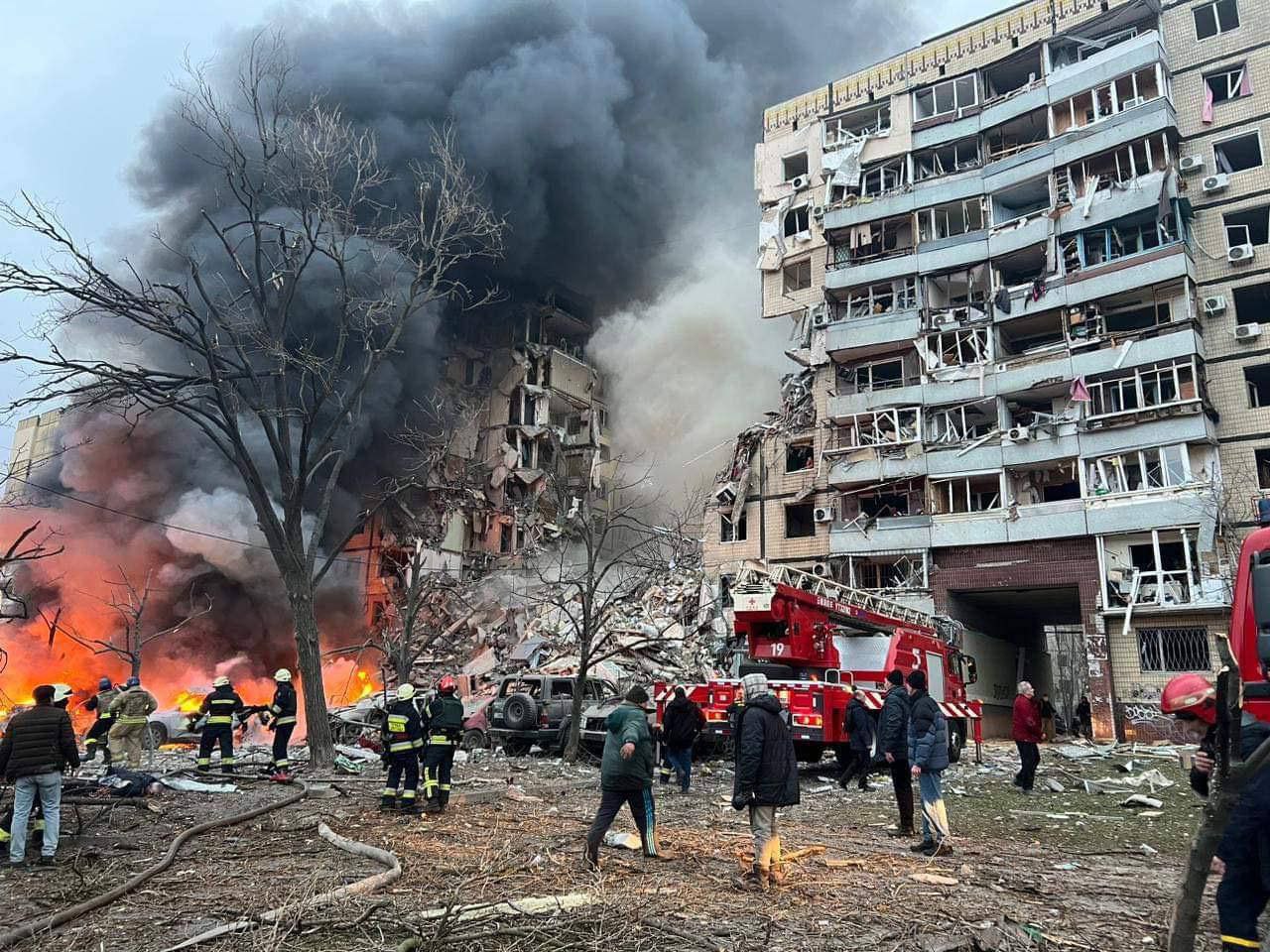
In a recent increase in confrontations, Ukrainian authorities have stated that the southern city of Kryvyi Rih, known as the birthplace of President Volodymyr Zelensky, faced a massive drone attack by Russian forces. This nocturnal offensive, characterized by local officials as one of the most severe in recent times, emphasizes the continuing risk to urban areas distant from active battle lines and highlights the changing strategies of aerial combat in the dispute.
According to the local military authorities, numerous Shahed drones manufactured in Iran were deployed in a synchronized attack against infrastructure and civilian sections of the city. Air defense units successfully intercepted many of these drones; however, a few managed to hit residential and industrial areas, resulting in property destruction and civilian injuries. Emergency crews were quickly sent out after the assault to evaluate the damage and provide aid to those impacted.
President Zelensky of Ukraine, a native of Kryvyi Rih, denounced the attacks in his statement, highlighting the steadfastness of Ukrainians and their resolve to protect their towns. He stressed that assaulting regions inhabited by civilians constitutes not just a breach of global laws but also an act of terrorism designed to instill fear and chaos.
Initial reports suggest that energy facilities and transportation hubs may have been among the intended targets, a tactic that has become increasingly common as Russian forces attempt to disrupt logistics and reduce morale. In previous months, similar drone and missile attacks have severely impacted Ukraine’s energy infrastructure, especially during colder seasons when heating becomes a strategic necessity.
The timing of this assault coincides with broader shifts on the battlefield. With the frontlines largely static and both sides experiencing logistical challenges, drone warfare has emerged as a key component of Russia’s broader strategy. Unmanned aerial vehicles (UAVs) are being used not only for surveillance but increasingly for precise, low-cost strikes designed to pressure Ukraine’s air defense systems and sap its resources.
Defense experts point out that the attacks carried out by drones accomplish several objectives. Besides their direct destructive impact, they force Ukraine to use up crucial interceptor missiles and manpower, thereby diminishing its overall defensive abilities. The comparatively inexpensive production and simple manufacturing process of these drones, especially the Shahed-136 models, enable Russia to sustain an ongoing threat despite a reduction in its missile reserves.
Kryvyi Rih, located in the Dnipropetrovsk region, is a significant industrial hub and holds both strategic and symbolic importance. Its connection to President Zelensky adds emotional weight to the attacks, and some observers believe that targeting the city may be an attempt to undermine his personal credibility or resolve. Despite this, Zelensky has continued to visit the region during the war, demonstrating solidarity with local populations and reinforcing national unity.
Authorities in Kryvyi Rih have mentioned that emergency teams operated overnight to put out flames and save individuals caught in collapsed structures. Multiple individuals sustained injuries during the assaults, while the overall number of victims is still being assessed. Videos shared by officials display burnt wreckage, ruined residential buildings, and burnt-out cars, starkly highlighting the conflict’s impact on civilian existence.
The global community has reacted to the recent events. Various European Union leaders and U.S. authorities have released statements denouncing the assault and reiterating their support for Ukraine’s sovereignty. Human rights groups have urged for increased efforts to record possible breaches of humanitarian law and to ensure responsibility through international legal frameworks.
In the meantime, Ukraine persists in requesting more sophisticated air defense systems and surveillance technology from its allies. As drone warfare grows more prevalent in the conflict, authorities insist that enhancing defensive measures is crucial to safeguarding both strategic resources and civilian communities.
Over the past few months, nations in the West have committed to more military support, which encompasses systems aimed at identifying and stopping drones. Nevertheless, Ukrainian defense units continue to be stretched thin, managing the need to safeguard key cities while conducting counteroffensive maneuvers in disputed regions.
The broader strategic implications of Russia’s continued reliance on drone strikes are still unfolding. Some experts interpret the shift as a sign of resource constraints and an inability to achieve objectives through conventional military means. Others view it as a tactical adaptation designed to erode Ukrainian resilience through persistent pressure and infrastructural attrition.
This latest wave of drone attacks also raises questions about the future trajectory of the war. With peace negotiations stalled and no clear resolution in sight, both sides appear locked in a prolonged conflict where technological innovation and asymmetric tactics play an increasingly central role.
For the people living in Kryvyi Rih, their pressing worry is staying alive and rebuilding. Local officials have called on citizens to stay alert, follow air strike alerts, and contribute to community rebuilding initiatives. In spite of the destruction, numerous residents have shown a strong resolve to stay in their city and proceed with their daily routines as a form of resistance against hostility.
As the struggle persists, the toll on human lives keeps rising. The drone attacks on Kryvyi Rih highlight once again the changing nature of the conflict, where boundaries are not just geographical but shaped by the range of automated technology and the determination of those facing the attacks.
El ataque de drones reportado en Kryvyi Rih resalta la creciente importancia de los vehículos aéreos no tripulados en los conflictos contemporáneos y señala un cambio estratégico más amplio por parte de las fuerzas rusas. Aunque las defensas de Ucrania lograron interceptar muchos de los drones entrantes, el incidente pone de manifiesto vulnerabilidades persistentes y la necesidad apremiante de apoyo internacional continuo. A medida que la guerra entra en una nueva etapa, ciudades como Kryvyi Rih permanecen en la línea de frente, no solo del conflicto, sino también de la resiliencia y la identidad nacional.