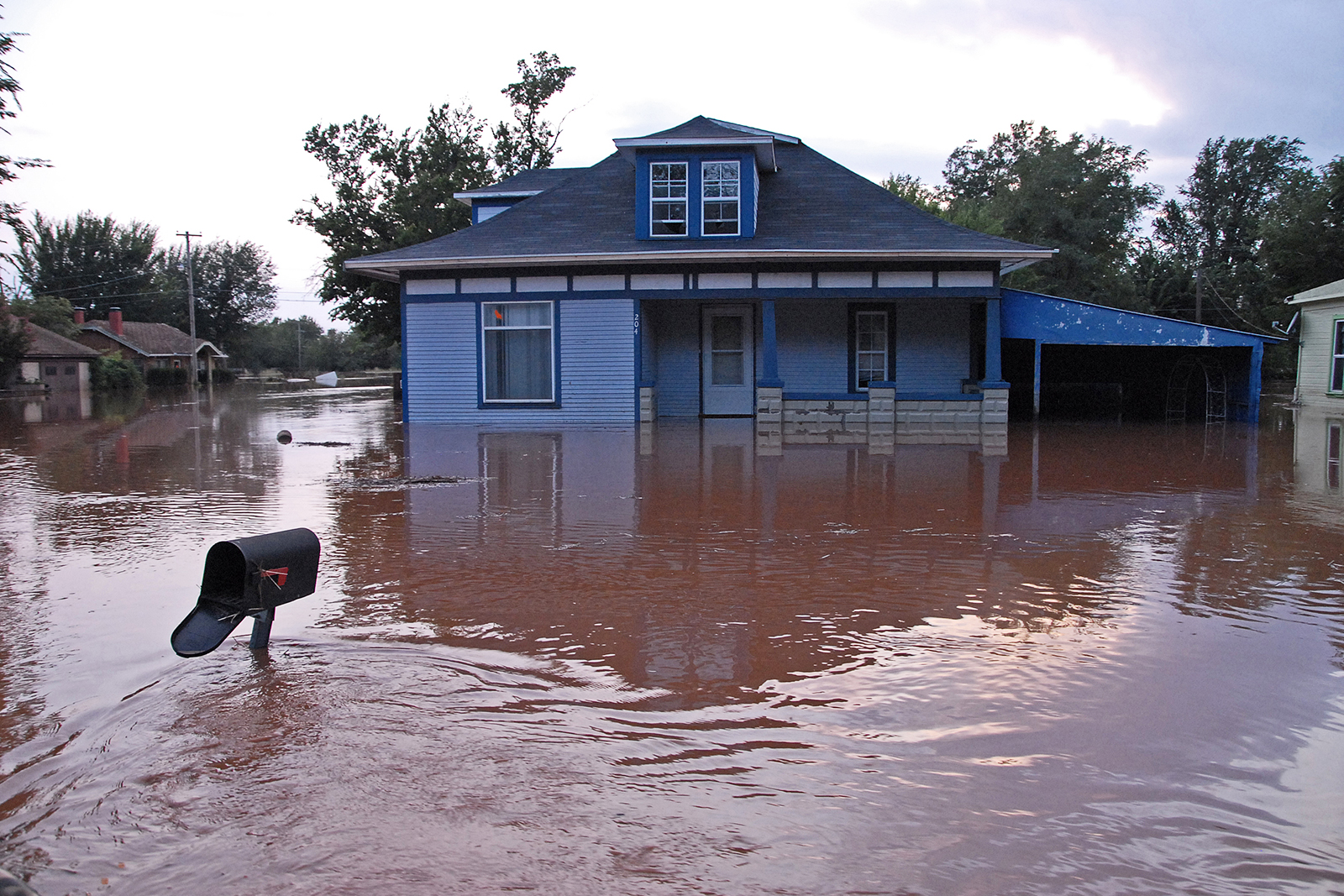
The maps intended to guide decisions on flood risk across the nation are increasingly being exposed as a source of hidden danger, not a solution. The Federal Emergency Management Agency’s (FEMA) flood maps, which are the primary tool for assessing a property’s vulnerability, are becoming demonstrably outdated. This creates a profound and dangerous paradox, as homeowners and investors are often lulled into a false sense of security, unwittingly taking on risks that are far greater than they realize. This systemic issue is reshaping the real estate market and a homeowner’s perception of their financial exposure.
For many years, FEMA’s flood maps have been the definitive resource for assessing flood insurance needs and evaluating the risk to properties. The classification of a residence on these maps influences whether a mortgage lender will require that the owner purchase flood insurance. If a house is situated outside of a recognized high-risk flood area, the owner is not obligated to maintain flood insurance and might decide not to obtain it, thinking that their risk is low. This dependence on obsolete information results in a significant disparity between the assumed risk and the genuine threat, paving the way for potential financial ruin in the future.
A major reason for the growing irrelevance of these maps is the accelerating impact of climate change. The maps are based on historical data, but the conditions that created those historical flood events are no longer a reliable predictor of the future. Rising sea levels, more intense and frequent rainfall events, and changes in land use have fundamentally altered flood patterns across the country. A property that was once considered safe based on a 100-year flood event may now be in a prime flood zone, a reality that the maps have not yet caught up to.
The limitations of the maps are most strongly experienced in the “transitional” regions—areas that are officially not classified as high-risk but remain highly susceptible. A large portion of the substantial flood damage in the past years has taken place in these specific regions. The residents in these regions are frequently the ones most at risk, as they are not mandated to possess flood insurance, leaving them without coverage when a catastrophe occurs. This results in a significant risk for both individuals and communities, as these uninsured damages impose a huge economic strain on local and national governments due to the need for disaster assistance.
The economic motivation to disregard risk is strongly ingrained in the existing framework. If a property is not located in a high-risk flood area, it tends to attract buyers more easily and is simpler to sell. The decreased insurance expenses and the perceived sense of security can establish a market value increase for these properties, even if they face an actual risk of flooding. This financial situation encourages everyone involved—homeowners, real estate professionals, and financial institutions—to depend on obsolete maps instead of conducting a more comprehensive and expensive risk evaluation. The present structure of the system favors unawareness rather than prudence.
The financial impact of this imperfect system is extensive. When severe flooding hits an uncharted region, the ensuing damage to properties causes a surge in foreclosures, a drop in nearby property values, and significant economic turbulence locally. The expenses for reconstruction unjustly burden federal taxpayers and families who lack insurance, creating a cycle of debt and recuperation that may last for years. These antiquated maps are thus more than mere mapping mistakes; they trigger economic instability.
One of the significant obstacles FEMA encounters is the high expense and complexity involved in revising the maps. This task is enormous, necessitating detailed hydrological modeling, comprehensive data gathering, and collaboration among various government bodies. The undertaking is costly and demands a lot of time, with the agency’s funding frequently not keeping up with the rapid environmental changes. This logistical situation implies that despite FEMA’s efforts to produce more precise maps, the updated versions might become outdated by the release time.
The process of updating the maps is also fraught with political challenges. When a property is reclassified into a high-risk flood zone, it can be a devastating blow to the homeowner, as it can cause a steep decline in property value and a dramatic increase in insurance costs. This often leads to strong opposition from homeowners and local politicians, who are reluctant to see their community’s real estate values plummet. This pushback creates a powerful disincentive for officials to act, even when the data shows a clear and present danger.
The real estate industry also plays a significant role in this flawed system. Realtors, lenders, and appraisers are all part of an ecosystem that relies on the official FEMA maps. While some are now starting to use more advanced, private-sector risk models, the industry as a whole is still slow to adapt. A more accurate and responsible approach would involve a fundamental shift in how risk is assessed and disclosed to buyers, moving beyond the official maps and towards a more comprehensive and forward-looking analysis of a property’s vulnerability.
The answer to this issue is found in a basic change in accountability and an increased dependence on cutting-edge technology. Property owners and financial backers can no longer depend exclusively on public maps. They need to be proactive in comprehending their actual risk of flooding by utilizing private sector simulations, local expertise, and an understanding of climate change patterns. The upcoming phase in evaluating flood risk will probably harness artificial intelligence and machine learning, able to handle large volumes of data to produce more adaptive and predictive models than the outdated static maps.
The reliance on outdated federal flood maps is creating a dangerous and unsustainable situation in the real estate market. The maps, once a tool for guidance, have become a source of false security, incentivizing property owners to take on risks they don’t fully understand. The challenges of climate change, economic incentives, and political opposition are all contributing to a growing gap between the mapped risk and the real-world danger. As a result, a new era of personal responsibility and technological innovation is needed to protect both property owners and the broader economy from the devastating consequences of living in harm’s way.