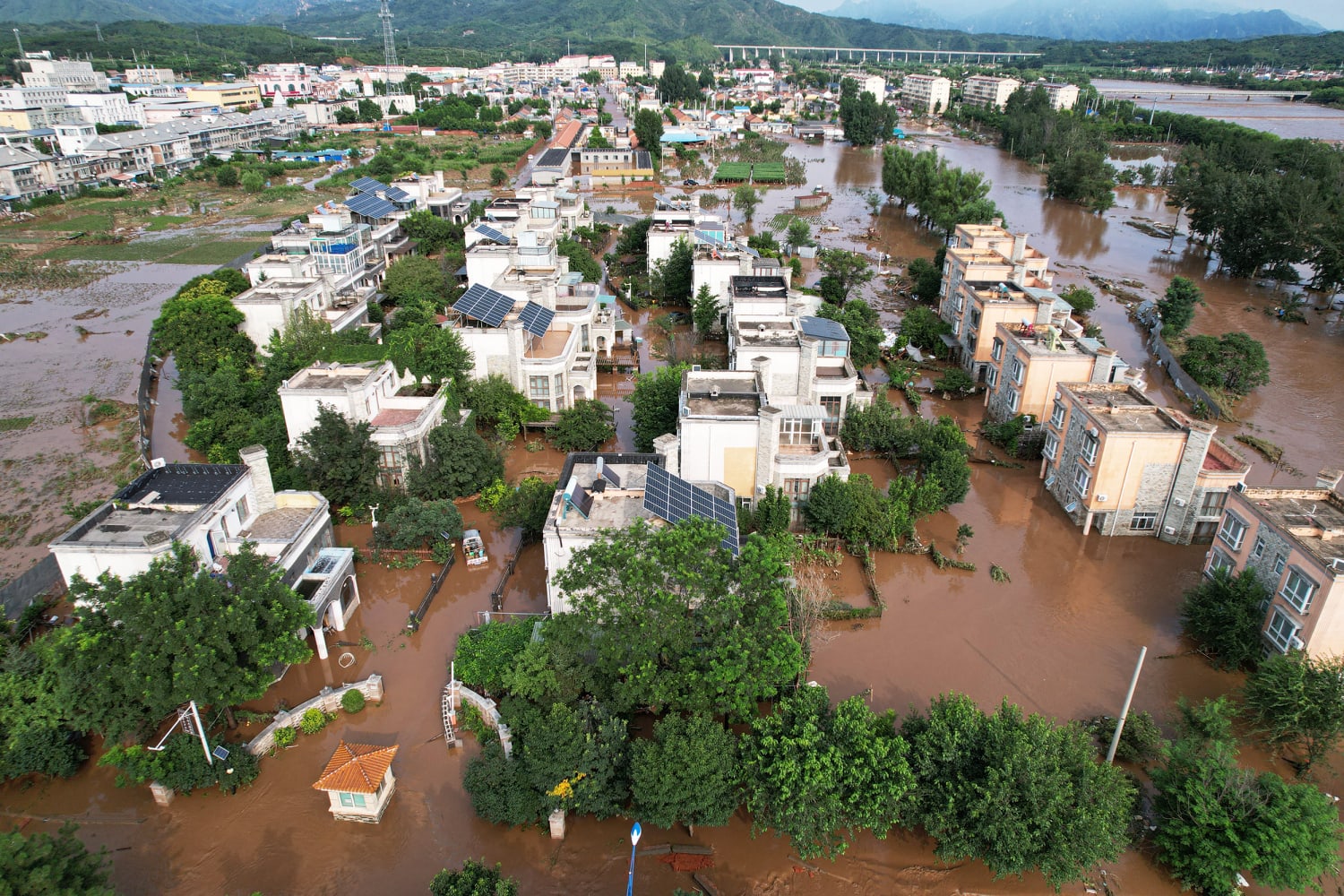
Heavy flooding has caused considerable destruction in and around Beijing, resulting in many fatalities and extensive chaos. As reported by local officials, the severe weather has claimed the lives of at least 38 individuals, with rainfall reaching amounts the area generally experiences over a full year. This catastrophe stands as one of the most severe flooding incidents in recent history for the Chinese capital and the neighboring provinces.
Initiated by a potent weather system that halted over northern China, the heavy rainfall led to rivers bursting their banks, inundation of communities, and crucial infrastructure collapsing under stress. Streets turned into waterways, metro services were suspended, and emergency teams faced challenges in reaching stranded inhabitants as the waters surged rapidly throughout both city and countryside areas.
The unprecedented rainfall—measured in some areas at nearly 750 millimeters (30 inches) over a few days—has overwhelmed both natural landscapes and urban drainage systems. Meteorologists noted that while summer storms are not uncommon in northern China, the intensity and duration of this event were well outside historical norms. Some monitoring stations reported record-breaking precipitation levels, reinforcing growing concerns about the increased frequency of extreme weather linked to climate change.
Among the most affected regions were the suburban areas in the western part of Beijing and sections of the adjacent Hebei Province. Numerous deaths happened due to houses falling down or cars being carried off by rising waters. Emergency services mobilized thousands of first responders, including military forces, to help with evacuations, provide assistance, and strengthen vulnerable infrastructure.
In one particularly tragic incident, a group of first responders attempting to evacuate residents was caught in a sudden surge, resulting in multiple casualties. Their sacrifice has been widely recognized as a testament to the dangers faced by those working on the front lines of disaster response.
Thousands of people have been displaced from their homes and are now residing in temporary shelters. The flooding has also disrupted transportation, suspended industrial operations, and damaged crops, raising concerns about the longer-term economic and humanitarian impact. Local governments have pledged financial assistance to affected families, while national agencies have dispatched additional resources to accelerate recovery efforts.
Beijing’s city structure, characterized by a combination of contemporary tall buildings and old, low-rise communities, faced specific difficulties during the flooding. Even with new financial input into the drainage infrastructure, the city’s systems were inadequate to cope with such heavy rainfalls. City planners have recognized the necessity for more robust mechanisms that can withstand severe weather, especially given changing climate trends.
Satellite images captured before and after the storm show dramatic changes in landscape: once-bustling highways turned into stagnant lakes, and agricultural zones now resemble wetlands. Environmental experts warn that recovery may take months, especially in flood-prone lowlands where water recedes slowly.
Simultaneously, health authorities are on the lookout for additional hazards like illnesses transmitted through water, pollution of potable water, and the proliferation of mold in moist structures. Medical personnel have been sent to impacted regions, provided with urgent supplies and mobile medical units.
This disaster comes amid broader national efforts to strengthen China’s disaster preparedness and climate adaptation strategies. Recent years have seen multiple provinces endure climate-related disasters ranging from floods to droughts and wildfires. Experts are calling for more proactive planning, including early warning systems, investment in sustainable urban design, and improved coordination between municipal and provincial governments.
The administration has announced a mourning period to honor those who perished and is thoroughly examining ways to enhance emergency response procedures. In a speech made after the catastrophe, officials highlighted the necessity of focusing on public safety and updating vital infrastructure.
While the immediate focus remains on search and rescue efforts, attention is also turning to questions about long-term resilience. How can rapidly growing cities like Beijing adapt to increasingly erratic weather? What policies are needed to ensure that new developments are flood-resistant? And how should communities be educated and equipped to handle emergencies?
This flood serves as a stark reminder of nature’s power and the urgent need to adapt urban environments to withstand the unpredictable impacts of climate change. It also underscores the importance of community solidarity and preparedness in times of crisis.
As cleanup operations continue and the nation begins to assess the full scope of the disaster, stories of survival and heroism are also emerging. Volunteers, medical personnel, neighbors, and strangers have come together to provide food, shelter, and support, showing resilience in the face of tragedy.
The journey to healing has started, yet for a large number of people, the wounds caused by the flood—both tangible and psychological—will persist. In the upcoming weeks and months, reconstruction initiatives will aim not only at repairing destroyed structures but also at strengthening the systems required to avert events of this magnitude in the future.
In the end, the disastrous flooding in the Beijing area goes beyond a simple weather occurrence; it serves as a wake-up call. As communities grieve, reconstruct, and adjust, the insights gained here could contribute to creating a safer and more resilient future.