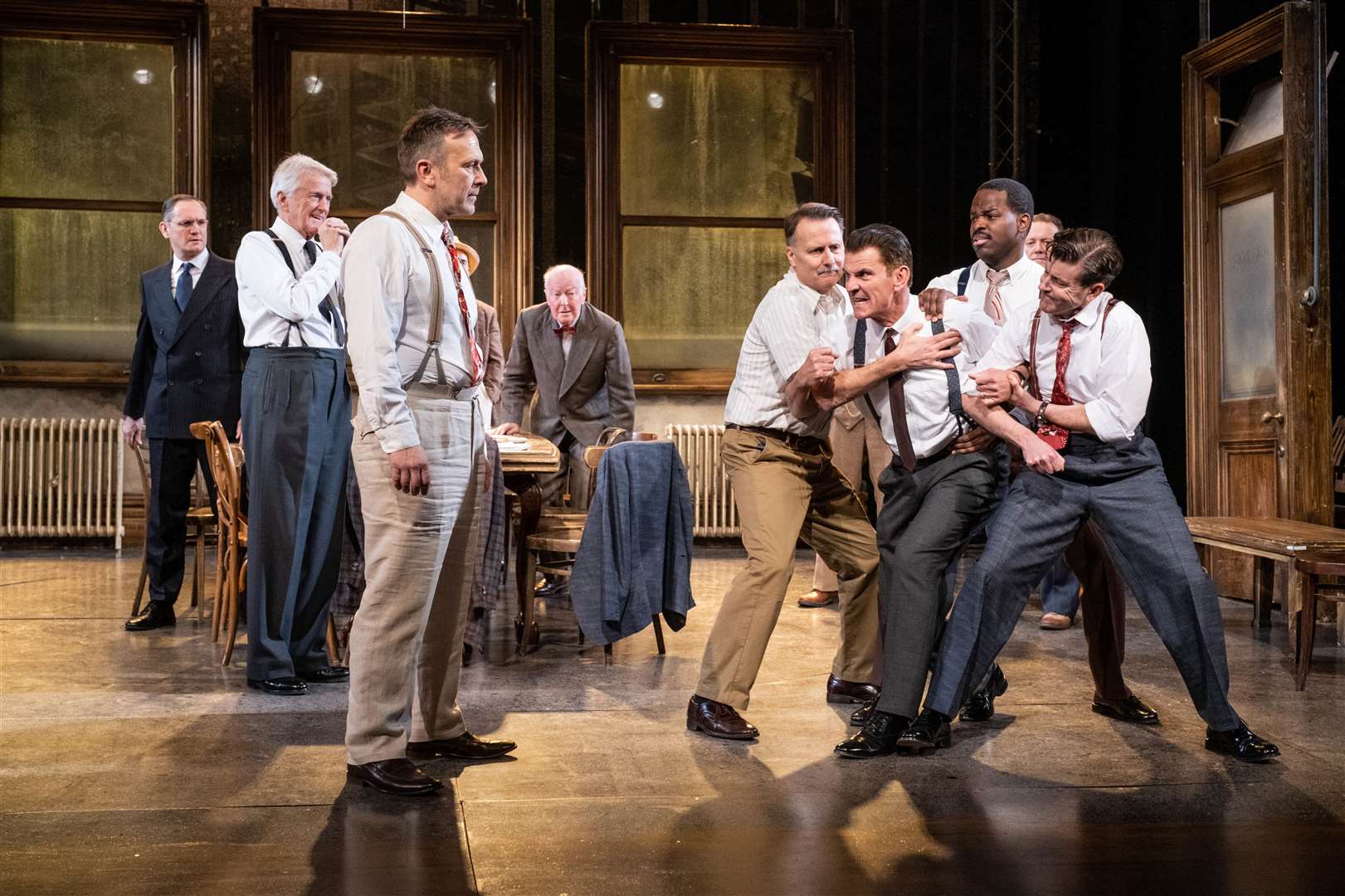
Sidney Lumet’s movie 12 Angry Men, inspired by Reginald Rose’s teleplay, remains a timeless examination of the American judicial system and the complex ethical dilemmas present in jury discussions. Confined to one jury room, the story centers on twelve people assigned to reach a unanimous verdict in a murder case, determining the outcome for a young defendant. More than its intense drama, the film delves into themes of moral duty, bias, justice, and the honesty of the legal process.
The Burden of Reasonable Doubt
The central theme of the story revolves around the principle that individuals should be considered innocent until their guilt is definitively established. This fundamental idea challenges each jury member with an essential ethical responsibility: to refrain from making a decision until the evidence convincingly persuades them otherwise. The protagonist, Juror 8, personifies this principle by asserting that the gravity of deciding a person’s fate requires thorough evaluation, expressing, “It’s not simple to vote for sending a young man to his death without discussing it thoroughly first.” This statement does more than question the effectiveness of the deliberation—it emphasizes the ethical duty to avoid rushing judgment when justice is at stake.
Instances where several jurors advocate for a quick guilty verdict to return to their personal lives sharply contrast the spirit of this principle. Their actions prompt viewers to grapple with the dangers of apathy and the ethical consequences of sacrificing thoroughness for personal convenience.
Prejudice and Bias in Decision-Making
The film unflinchingly depicts how ingrained biases, whether explicit or subtle, threaten the objectivity expected of jurors. Juror 10 makes derogatory generalizations about people from slum backgrounds, suggesting that criminality is inevitable in certain environments. His assertion, “You know how these people lie. It’s born in them,” is a chilling reminder of how prejudice can cloud rational judgment.
Ethically, such bias undermines the concept of equality before the law—a cornerstone of democratic jurisprudence. The film exposes the danger when preconceived notions of race, social class, or ethnicity shape the search for truth, implicitly calling upon both viewers and participants in justice systems to vigilantly confront their own prejudices.
Group Dynamics and the Power of Dissent
12 Angry Men adeptly explores the ethical significance of independent thought in group settings. Peer pressure and the psychological drive for consensus tempt several jurors to suppress doubts or acquiesce to the majority. Juror 8’s willingness to stand alone, despite hostility and ridicule, exemplifies ethical courage—the refusal to betray one’s conscience in the face of opposition.
The film becomes a broader meditation on the ethics of dissent: Is it easier to ‘go with the flow’ or to voice inconvenient truths despite personal cost? The narrative rewards those brave enough to challenge the collective, reminding viewers of the indispensable role dissent plays in safeguarding justice.
Accountability, Ethics, and Moral Consciousness
Los jurados no son simplemente piezas de una máquina impersonal; la película resalta su papel como agentes morales responsables de las repercusiones de sus decisiones. La actitud despreocupada inicial del Jurado 7 —votando basándose en intereses impersonales o impaciencia— actúa como un retrato de advertencia sobre la negligencia ética. En cambio, los Jurados 9 y 11 reflejan la calma y la fortaleza de la integridad personal; optan por examinar detenidamente las pruebas y cuestionar los supuestos, cumpliendo sus deberes con una consciencia sobria de la seriedad involucrada.
Through these character contrasts, 12 Angry Men illustrates the ethical necessity for individuals in high-stakes situations to act conscientiously rather than passively, reinforcing how justice depends on personal accountability.
Reality, Proof, and the Constraints of Human Perception
A crucial yet nuanced ethical question examined is the essence and quest for truth. The discussions reveal how eyewitness accounts and physical clues, although vital, may be compromised by mistakes or misjudgment. Juror 8’s careful analysis of the evidence emphasizes the necessity of modesty and doubt; no individual viewpoint or detail is beyond question.
Ethically, the movie questions the pursuit of complete certainty in the enforcement of justice. The jury must recognize that their views are subjective, unavoidably influenced by human mistakes, and that considering someone innocent until proven guilty is an ethical protection against the devastating effects of this imperfection.
Justice and the Societal Good
The movie challenges limited interpretations of justice as just a legal technicality. Alternatively, justice becomes an ongoing, collective effort to respect the dignity and rights of all people, including the defendant and the larger community. The discussions highlight the wider ethical consequences of their judgment: Will their decision bolster bias or promote equity? Does preserving due process enhance the social trust that supports democracy?
This broader perspective compels both the fictional jurors and real-life audiences to reflect on their own roles within systems of power, and how ethical conduct or negligence can shape the well-being of others, often irrevocably.
12 Angry Men is not just a movie about a jury; it is a deep exploration of the eternal ethical dilemmas inherent in human decision-making. Through its dynamic characters and well-crafted story, it prompts continuous contemplation on the duties we owe—to others, to the defendant, and to the values supporting fair communities. The moral challenges faced by the jurors remain relevant, prompting careful consideration of the issues of bias, duty, and the quest for justice in every area of life.