Month: March 2026

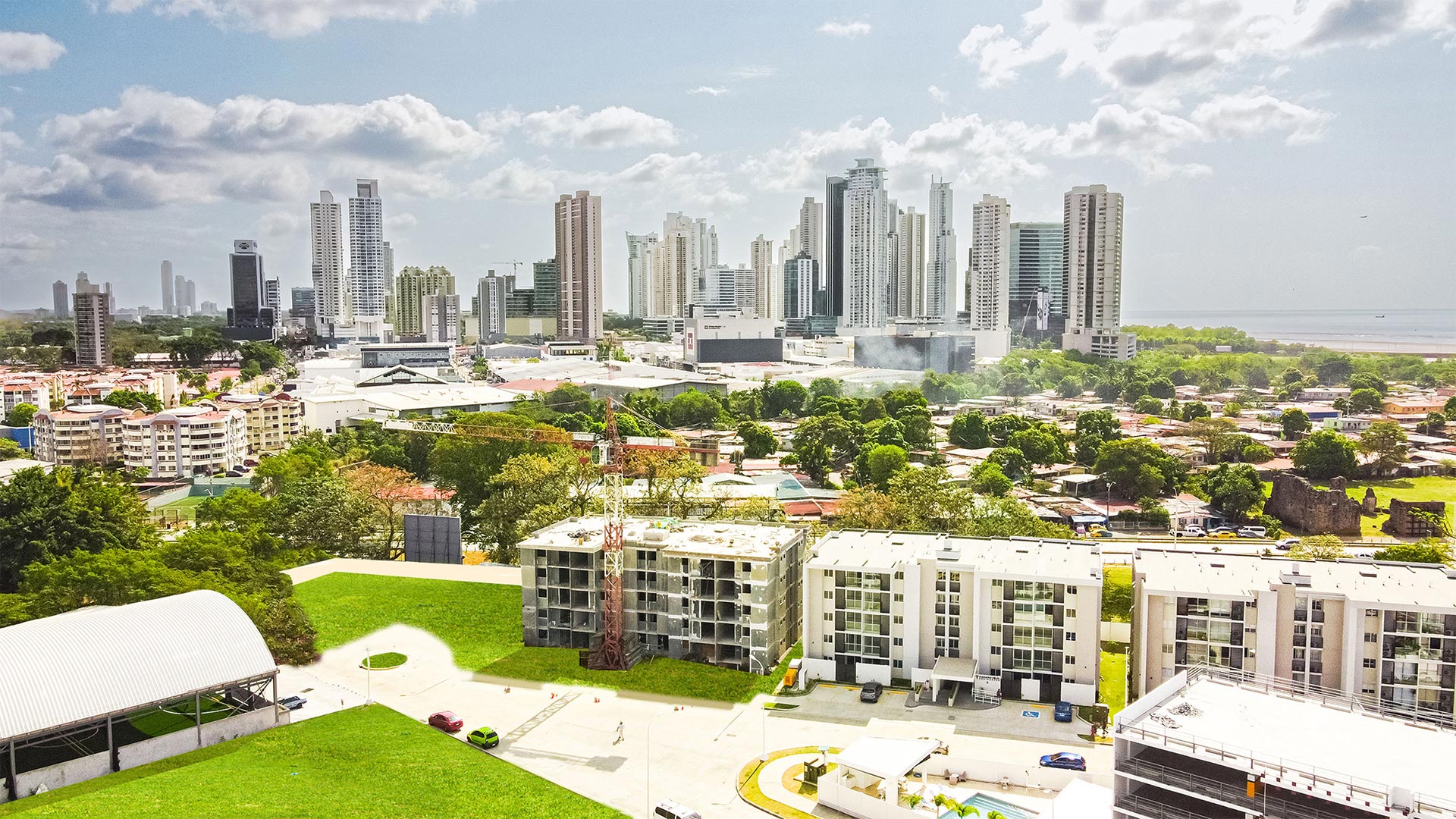
Panamá Viejo Residences: urban calm in Panama City

Panamá Viejo Residences: Tranquil Urban Homes in Panama City

Panamá Viejo Residences has become an attractive option for those who want to enjoy peace and quiet without straying far from downtown Panama City. Its residential setting, steeped in history and featuring green spaces and lower urban density, offers a more relaxed lifestyle within one of the capital’s best-connected areas.In addition to featuring contemporary apartments within a thoughtfully planned community, the project sits close to natural areas like Omar Recreational Park and provides swift connectivity to key routes including the Corredor Sur and Vía Cincuentenario. If you’re still asking why Panama Viejo Residences is ideal for enjoying tranquility without stepping…
Read More
What trends are shaping blockchain scalability without sacrificing security?

Future of Blockchain: Scalability & Security

Blockchain scalability has long been limited by the so‑called trilemma, which challenges networks to balance decentralization, security, and scalability simultaneously. Early blockchains emphasized decentralization and security, but that focus constrained their transaction capacity and drove up fees whenever demand surged. Recent advances, however, indicate that greater scalability no longer has to undermine security. Emerging architectural, cryptographic, and economic approaches are redefining how blockchains expand while maintaining their core trust assurances.Layer 2 Technologies Evolving into Essential InfrastructureOne of the most influential trends is the maturation of Layer 2 scaling solutions. Instead of increasing the burden on the base blockchain, Layer 2…
Read More
Chad: CSR cases improving access to energy and essential community services

Chad: CSR Case Studies on Energy & Community Service Improvement

Chad faces steep development challenges shaped by geography, low density, and decades of underinvestment. With a population of roughly 16–18 million and one of the lowest GDP per capita levels in the world, basic services and reliable energy access remain limited. National electricity access is low — generally estimated at around 10% — and rural electrification is in the low single digits. In that context, corporate social responsibility (CSR) programs alongside donor and NGO interventions have become important complements to public action, focusing on renewable energy, electrification of social facilities, clean cooking, water services and community development.Why CSR plays a…
Read More
¿Cómo comprobar afirmaciones de calidad, sostenibilidad o “compromiso social” en empresas líderes?

The Bigger Picture: Recycling and Plastic Pollution

Plastic recycling is often depicted as a catch‑all solution to plastic pollution, but the reality is considerably more complex. Although recycling provides significant benefits, it cannot by itself eradicate plastic waste because of technical, economic, behavioral, and systemic limitations. This article examines these constraints, offers relevant evidence and illustrations, and underscores complementary strategies that must accompany recycling to create lasting change.Today’s scale: exploring how production, waste, and the true effects of recycling come togetherGlobal plastic production has grown to well over 350 million metric tons per year in recent years. A landmark analysis of historical production and waste found that,…
Read More
Why are antitrust trends influencing big-tech strategy and valuations?

Navigating Antitrust: Big Tech Strategy and Valuation Challenges

Antitrust policy has moved from a distant regulatory concern to a direct strategic force influencing how major technology companies function, allocate capital, and are assessed by markets, as governments increasingly regard digital platforms as essential infrastructure with considerable economic and social influence, a change that is reshaping business models, deal strategies, and investor expectations throughout the industry.The Regulatory Turn: Moving Beyond Individual Evaluations Toward Broad System OversightFor decades, antitrust enforcement was aimed at isolated practices like price fixing or overseeing mergers, but regulators now often assess digital platforms through a broader systemic perspective that examines market architecture, data-driven advantages, and…
Read More
China: industrial CSR cases cutting waste and improving transparency

Industrial CSR in China: Promoting Waste Reduction & Transparency

Over the past decade Chinese industry has shifted from a narrow focus on output and growth to a more complex mix of environmental responsibility, social governance, and supply chain transparency. Driven by central regulations, investor demands, brand pressure, and new digital tools, manufacturers across steel, chemicals, electronics, textiles, and recycling have launched corporate social responsibility (CSR) programs that reduce waste, close material loops, and make environmental data more visible. The following synthesis highlights regulatory drivers, illustrative industrial cases, technological enablers, measurable outcomes, and remaining challenges.Regulatory and market driversRegulation and market dynamics have converged to spur both waste minimization and clearer…
Read More
How do firms manage culture during rapid scaling or restructuring?

Restructuring: Navigating Cultural Shifts

Organizational culture encompasses the shared values, behaviors, norms, and implicit beliefs that influence how work gets done, and it can face intense pressure during periods of rapid growth or restructuring. As staffing levels climb, reporting lines may be reorganized, and processes are often reworked. Without intentional guidance, the culture can easily drift toward inconsistency, fragmentation, or a weakened connection to the broader strategy.Companies that manage to thrive in such times approach culture as a core operating system instead of viewing it as a vague notion, understanding that it shapes execution speed, fuels employee engagement, influences customer experience, and drives sustained…
Read More
Caracas, in Venezuela: What signals operational resilience in volatile demand environments

Caracas, Venezuela: Operational Resilience Frameworks for Volatile Demand

Caracas functions within one of the most unstable economic and political environments in recent memory, and organizations operating there — from retailers and healthcare providers to logistics companies, utilities, and NGOs — find that success hinges less on flawless forecasting and more on recognizing clear signals that operational resilience is holding up amid swiftly shifting demand. This article highlights those signals, clarifies their importance, and offers concrete examples, data-driven indicators, and practical steps that managers can apply to track and reinforce resilience.Background ContextCaracas stands as Venezuela’s political and commercial center, home to much of the nation’s population, skilled workforce, and…
Read More
Montevideo, en Uruguay: cómo escalan las fintech con cumplimiento y confianza del usuario

Compliant Scaling: Lessons from Montevideo Fintech

Montevideo, Uruguay’s capital, blends a compact metropolitan landscape with extensive regional links, a reliable legal framework, and a highly trained software engineering talent pool. For fintech founders, the city provides an efficient setting for product development, access to bilingual professionals, and close reach to major Latin American markets. Startups based in Montevideo can expand across the region while taking advantage of favorable time zones that support nearshore collaboration with teams in North America and Europe.Key contextual points:Size and density: Montevideo accounts for nearly one-third to one-half of Uruguay’s entire population, bringing together users, technical talent, and demand for financial services…
Read More
The ROI Imperative: Procurement’s New Contract Standard

The ROI Imperative: Procurement’s New Contract Standard

Procurement teams across industries are applying stricter scrutiny to purchasing decisions than ever before. The central reason is simple but powerful: organizations want measurable value. As budgets tighten, markets fluctuate, and executive accountability increases, procurement leaders are under growing pressure to justify every contract with clear, defensible return on investment.This shift is reshaping how vendors sell, how contracts are evaluated, and how value is measured throughout the supplier lifecycle.The Changing Role of ProcurementProcurement has moved far beyond a back-office task centered solely on cutting expenses and choosing vendors, transforming into a strategic field that actively shapes profitability, risk mitigation, and…
Read More